
Category 2 · 8 questions
Customs duty & import taxes — why you're being charged
The duty-free threshold, the 6-times-per-half-year limit, whether customs value includes freight, whether "duty-paid" is even real — we work the import-tax math out for you, line by line
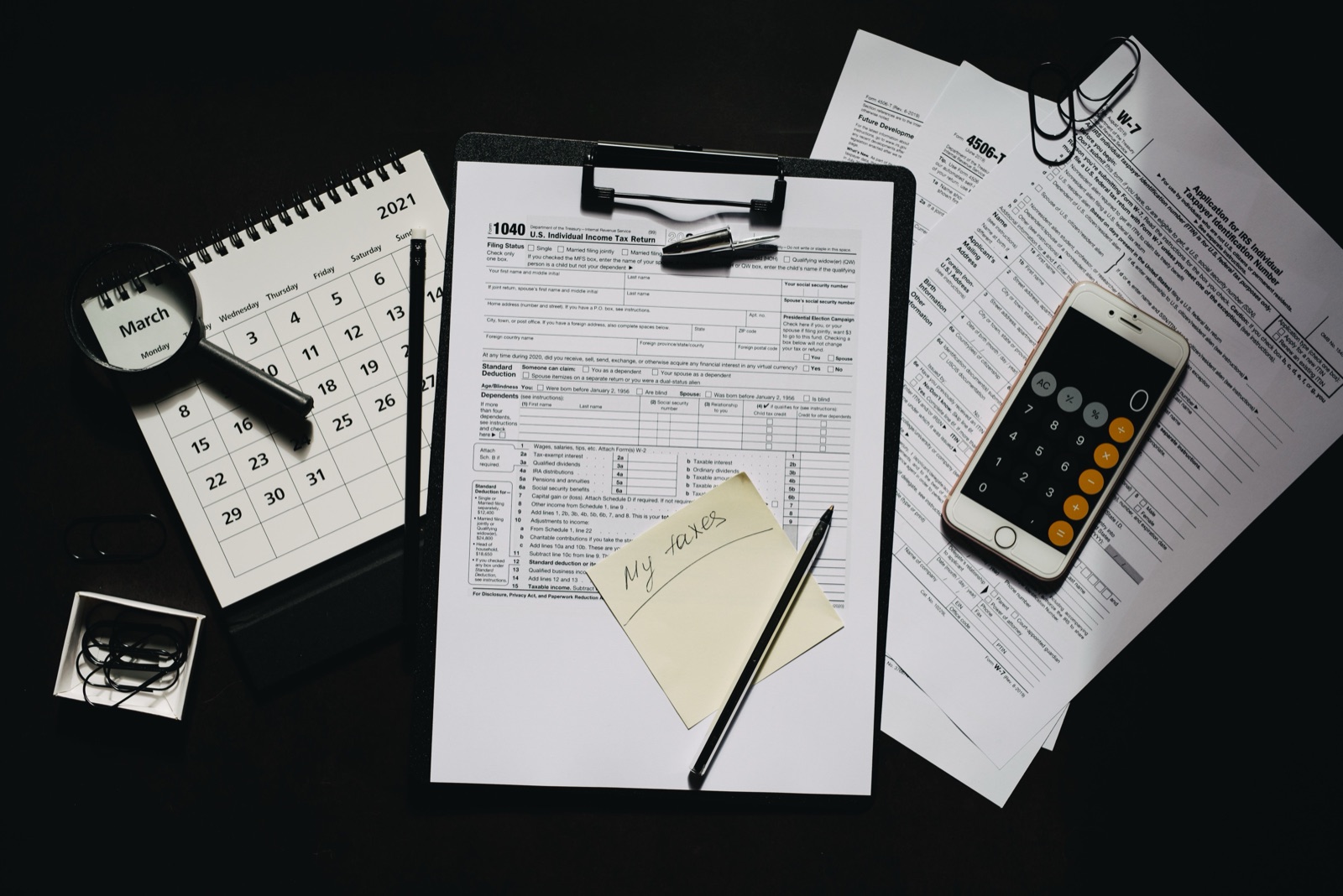
Where duty comes from
Import taxes,
worked out line by line
The duty-free threshold, the 6-times-per-half-year limit, whether customs value includes freight, whether "duty-paid" is even real — we get the import-tax math straight for you.
01I spent just over a thousand and got hit with NT$165 in tax — how are import taxes actually calculated?★
The mystery behind your "NT$165" is, nine times out of ten, hidden in these three facts most people don't know:
Fact 1: what you're charged usually isn't just "duty" — there's business tax too. Import taxes = customs duty + 5% business tax. Duty depends on the product, and plenty of everyday goods sit at 0% to 10%; but the 5% business tax applies to almost everyone. That charge on your bill is often mostly business tax, not duty.
Fact 2: tax isn't figured on "what your card was charged" — it's figured on the customs value. Customs value = goods value + international freight (+ insurance). Buy NT$1,100 of goods with NT$400 of freight, and in Customs' eyes this shipment is NT$1,500 — a bigger tax base than you'd think.
Fact 3: the NT$2,000 duty-free threshold isn't an open bar. Go over 6 times in a half-year and the 7th onward is taxed no matter how cheap (see Question 4). People who say "I never used to get charged" have usually just run out of their count.
Let's actually run the numbers once (assuming a product with 5% duty):
- Customs value (goods + freight) = NT$3,000
- Customs duty = 3,000 × 5% = NT$150
- Business tax = (3,000 + 150) × 5% = NT$158 (note: business tax is charged on "customs value + duty" — tax on tax)
- Total: roughly NT$308
So that "just over a thousand" order charged NT$165: the customs value probably landed just over NT$3,000 with 0% duty on the product, making the NT$165 pure business tax — or your duty-free count had run out. Once you know the formula, the next time a bill lands you can check it yourself in ten seconds.
Small personal orders — do it the way above; high volume or commercial, message us on LINE and we'll handle a formal import for you.
02Is customs duty figured on my "purchasing cost"? What exactly is "customs value"?
Close, but not the whole story. The basis Customs uses to assess tax is the customs value — conceptually, "the total cost of getting this shipment to Taiwan's doorstep": goods value + international freight + insurance (in trade terms, CIF). So the same product shipped by air (pricey freight) versus by sea (cheap freight) carries a different customs value, and a different tax — a layer many people overlook.
Another key point: "what you declare" doesn't equal "what Customs accepts." The declared value is filled in by you (or the agent declaring on your behalf), but Customs holds a large body of pricing data for similar goods; if a declared value is clearly below market — say, an iPhone declared at NT$500 — Customs won't take it at face value, and will reassess at a reasonable value (see Question 6 for details).
A practical tip for anyone doing business: keep your invoices and order records from sourcing. A declared value backed by evidence gives you something to prove your case with if Customs disagrees on valuation; with nothing to show, you can only accept Customs' determination.
Small personal orders — do it the way above; high volume or commercial, message us on LINE and we'll handle a formal import for you.
03How is the NT$2,000 duty-free allowance figured? Does freight count toward it?
The rule itself, in one line: imported parcels with a customs value of NT$2,000 or less are exempt from customs duty and business tax (with exceptions for tobacco, alcohol and a few special items). But two spots trip people up most:
First, the NT$2,000 looks at the "customs value," which includes international freight. Buy NT$1,800 of goods and you think you've cleared it comfortably; add NT$350 of freight and the customs value is NT$2,150 — over the line, and the whole shipment is taxed, not just the NT$150 over. This is where most people get caught: the exemption is a threshold, not a deduction. Cross it, and the whole shipment is taxed from the first dollar.
Second, combining parcels can push you over the line. Merge five orders into one box at the consolidation warehouse and Customs sees "one shipment" — five small orders of NT$600 each become NT$3,000 combined, and it's taxed outright. Combining saves freight; shipping separately keeps you under the exemption — the two pull against each other, and you have to work out which is the better deal (and don't forget separate shipments eat into your duty-free count — see the next question).
So the savvy move is to do the mental math before you order — "goods value + estimated freight," is it within NT$2,000? — rather than just eyeballing the cart total.
Small personal orders — do it the way above; high volume or commercial, message us on LINE and we'll handle a formal import for you.
04What's the "6 times per half-year" rule? What happens if you import frequently?
This is the hidden clause on the NT$2,000 exemption: per person, the number of duty-free imports in a half-year is capped at 6 (each year splits into two half-years, Jan–Jun and Jul–Dec). From the 7th onward, even a NT$300 trinket gets taxed.
How is "the same person" determined? It follows your real-name verification — that is, your identity in EZ Way (Taiwan's real-name verification app for personal import declarations). Each parcel declared under your name counts once. Plenty of people impulse-buy eight orders on Double 11, ship them all by air in separate batches, and burn through a half-year's allowance in a month — then get a tax notice on every parcel and assume Customs is out to get them.
- Let what can combine, combine: parcels arriving on the same day, in the same batch, are in practice often counted as a single declaration — saving count versus a stream of trickle-in arrivals (but watch that the combined value may exceed NT$2,000, back to the trade-off in the previous question).
- Keep your own tally: you can see your import history in EZ Way, so you'll know when the count is running low.
- An honest heads-up: some people think about "borrowing a family member's name to open up a few more allowances" — but whoever's name you use carries the legal responsibility. Dragging family into declaration risk you don't fully understand isn't worth the little tax you'd save.
- The fundamental point: if your volume already outgrows 6 times a half-year — congratulations, you're running a business now, and it's time to seriously consider formal customs declaration, treating tax as a cost and building it openly into your price.
Small personal orders — do it the way above; high volume or commercial, message us on LINE and we'll handle a formal import for you.
05Is "duty-paid" service real? How does Customs actually decide what to tax?
Answer the second half first, and the answer to the first half surfaces on its own.
Customs isn't drawing names from a hat — it's risk management. The daily parcel volume is enormous, so Customs runs risk assessment by system: declaration data (product description, value, recipient history) goes through a first computer screen, and anything anomalous — say, a clearly low declared value, vague catch-all descriptions ("gift," "sample"), sensitive items, or one recipient importing heavily in a short period — has a high chance of being pulled; that's then paired with X-ray scanning and physical spot-inspections. So "will I be taxed" isn't luck — it's whether your shipment looks normal in the system's eyes.
With that understood, look again at "duty-paid": duty is collected by the government, and no operator has the power to waive your tax. So-called duty-paid service is, at heart, an operator pooling many people's goods and gaming Customs' screening net by means like under-declaration — win the bet and they pocket the spread; lose it, and the tax, the penalty, even the risk of the whole batch being seized, all land on the cargo owner. What they're selling you isn't a service — it's a seat at their gambling table.
And the odds on that bet are getting worse: with electronic declaration data and real-name verification in place, Customs has a far better grip on "who, how often, importing what, declaring how much" than it used to. In one line: tax is the most transparent, most calculable item in your import costs (the formula in Question 1 lets you work it out). Trading a cost you can calculate for a risk you can't — think that deal through before you sit down.
Small personal orders — do it the way above; high volume or commercial, message us on LINE and we'll handle a by-the-book declaration for you.
06What value does Customs assign to my goods? Why is it different from what I paid?
Because Customs' job is to "tax it correctly," not to "believe every declaration form."
Here's how it works: the declared value goes in, and Customs compares it against its pricing data (historical declarations and market rates for similar goods). Land within a reasonable range and you're taxed on what you declared; come in clearly low and Customs can decline it and reassess at the reasonable value it finds — which is why someone "buys an NT$800 item and gets taxed on NT$2,500." It isn't necessarily Customs running wild; more often it's the party declaring on your behalf having reported the value low (a common move with some cheap consolidators), Customs pulling it back to market, and you stuck in the middle, blameless.
If you're sure of the price you paid and it's been assessed too high, what then?
- Produce proof of purchase: order screenshots (showing the amount, date and product page), card or payment records, the invoice. Genuine transaction evidence is the strongest.
- File an appeal with Customs through the declaring agent, attaching the proof. Customs valuation isn't beyond discussion, but "your word for it" gets you nowhere — "with documentation" gives you a shot.
- Be ready for the ultra-low prices of sales and clearances: a genuine item you grabbed at 30% off is, in Customs' database, still the market price — your appeal's success there hinges on how complete your evidence is, and screenshotting the order page with the original price and discount shown improves your odds a lot.
There's only one habit that protects you: screenshot the order page for every cross-border purchase. You won't need it 99% of the time; the 1% you do, it can save you a whole bill of unjust tax.
Small personal orders — do it the way above; high volume or commercial, message us on LINE and we'll handle a formal import for you.
07How does Taobao taxation actually work? From order to payment, made clear in one pass
Lay the whole flow out and you'll know what's happening at each stage — and where to look when something stalls:
- ① You order → the seller ships to the consolidation warehouse; after combining, it goes onto a ship / plane.
- ② Goods arrive in Taiwan → the appointed customs broker declares to Customs (express parcels mostly go through simplified declaration; the product description, value and recipient are submitted at this point).
- ③ EZ Way pops up an authorization notice → you tap "Agree," which authorizes that broker to declare under your name. If this step stalls, the whole shipment stalls with it — don't leave the app notification on read.
- ④ Customs review → the system runs a risk screen (see Question 5); most are released straight through, and those pulled go to inspection.
- ⑤ If taxable, a tax notice is issued → the point that confuses most people: you usually don't go to Customs to pay the tax yourself. In practice the broker or logistics provider pays it on your behalf first, the goods are delivered as normal, and you're charged on delivery or billed afterward. So "I never paid tax, how did the goods arrive?" and "I got hit with an extra charge out of nowhere" are often the same thing: the tax was prepaid for you, and the bill came later.
- ⑥ Released for delivery → it reaches your hands.
Once you see the flow, three common questions solve themselves in seconds: "Is the tax I was charged reasonable?" — verify it with the Question 1 formula; "Why does someone else not get charged when I do?" — it's eight-to-one your count (Question 4) or your combining (Question 3); "Stuck and not moving?" — first check whether the EZ Way authorization was tapped, then whether it went into inspection.
Small personal orders — do it the way above; high volume or commercial, message us on LINE and we'll handle a formal import for you.
08I'm not home — what happens with a parcel that has duty to pay?
First, relax: in most cases you won't run into the "cash on the doorstep, goods in hand" scenario at all.
As Question 7 explained, the tax on a cross-border parcel is mostly prepaid by the operator and the goods are delivered as normal; the cost is collected on delivery or billed later on the consolidation account. So the answer to "what happens with the tax if I'm not home" is usually: the tax was sorted out long ago — you just collect the parcel as usual.
If you really do hit "cash on delivery (including taxes)" and you're not home:
- Home delivery: the driver leaves a collection slip or calls; reschedule the time, change the address, or have a family member receive and pay on your behalf — anyone who can cover the cash will do, it doesn't have to be you.
- Convenience-store pickup: pay when you scan the barcode in store, and collect within the window (usually 7 days) — which actually suits people who aren't home best.
- Post-office parcels: the collection slip names the holding office; bring ID, collect, and pay the taxes at the counter.
The one thing to watch: both collection and storage have deadlines. Let it lapse and at best it's returned, at worst you're on the hook for return-shipping costs. If tracking shows "out for delivery" and you're out of town, spending 30 seconds to change the delivery method beats chasing down a returned parcel a hundred times over.
Small personal orders — do it the way above; high volume or commercial, message us on LINE and we'll handle a formal import for you.